Jasmine Tamang
From a Himalayan forest to Manhattan's last salt marsh — how the quiet, felt sense that a place is sacred can itself become an act of conservation.
Read Jasmine's story →As Director of Undergraduate Research at St. Joseph's University New York, Brooklyn Campus, I get to do something rare in a professor's week: hand a student the keys and help them drive. That happens along two very different paths — a summer fellow chasing her own question into the field, and a research intern earning co-authorship inside a global, multi-lab study. Two students, two kinds of mentorship. Pick a story to begin.
From a Himalayan forest to Manhattan's last salt marsh — how the quiet, felt sense that a place is sacred can itself become an act of conservation.
Read Jasmine's story →Building and running St. Joseph's arm of a twenty-nine-lab replication of a famous effect — and earning a place on the published paper.
Read Alia's story →Well... every mentor remembers their first. Jasmine Tamang was the first student I mentored through the SURF program, and she set a high bar for everyone who follows. An international student from Kathmandu, Nepal, she arrived with something you cannot teach — a question she could not stop asking — and the willingness to chase it into the field. She is now a student in a program I direct on the Brooklyn campus, which means I get the rare pleasure of watching a researcher I mentored keep growing.
What made Jasmine a joy to mentor was not that she needed less guidance, but that she used it so well. Give her a theoretical frame and she'd return with three field observations that complicated it. To the extent that mentorship is the art of staying out of a good student's way while keeping them honest, Jasmine made the job easy.
Jasmine's SURF 2025 project began with a deceptively simple question: what makes a place sacred to someone, even when nothing marks it as such — and does that bond shape how fiercely they protect it? She had felt the answer before she could name it. In 2023, volunteering on a reforestation program in Nepal's Annapurna Conservation Area, she watched villagers relate to land as something they were responsible to, not merely something they used. Later, in the forest of Shingla in the Ruby Valley, she found a different kind of conservation altogether — certain trees left untouched with no fences and no rules, protected by belief and memory rather than policy.
The startling move in her thinking was to ask whether that reverence really lived only in remote, traditional places. Researching urban green space for a class, she found Inwood Hill Park at the northern tip of Manhattan — home to New York City's last natural salt marsh and to deep Lenape history — and felt the same quiet bond she'd felt in the Himalayas. Her project turns the usual conservation question on its head: rather than starting with conservation and asking how to inspire care, it starts with care and asks how that feeling might already be conservation.
Theoretically, she grounded the work in place attachment — the multidimensional emotional, cognitive, and behavioral bond people form with meaningful places (Scannell & Gifford, 2010) — alongside research on urban parks as sites of memory and belonging (Low, Taplin, & Scheld, 2005), emotional geography (Anderson & Smith, 2001), and Indigenous, relational understandings of land as kin (Kimmerer, 2013; Whyte, 2018). Methodologically, she did what good field researchers do: she went and looked. Across a ten-week summer, she ran a survey, conducted interviews, and observed the park's quiet rituals firsthand.
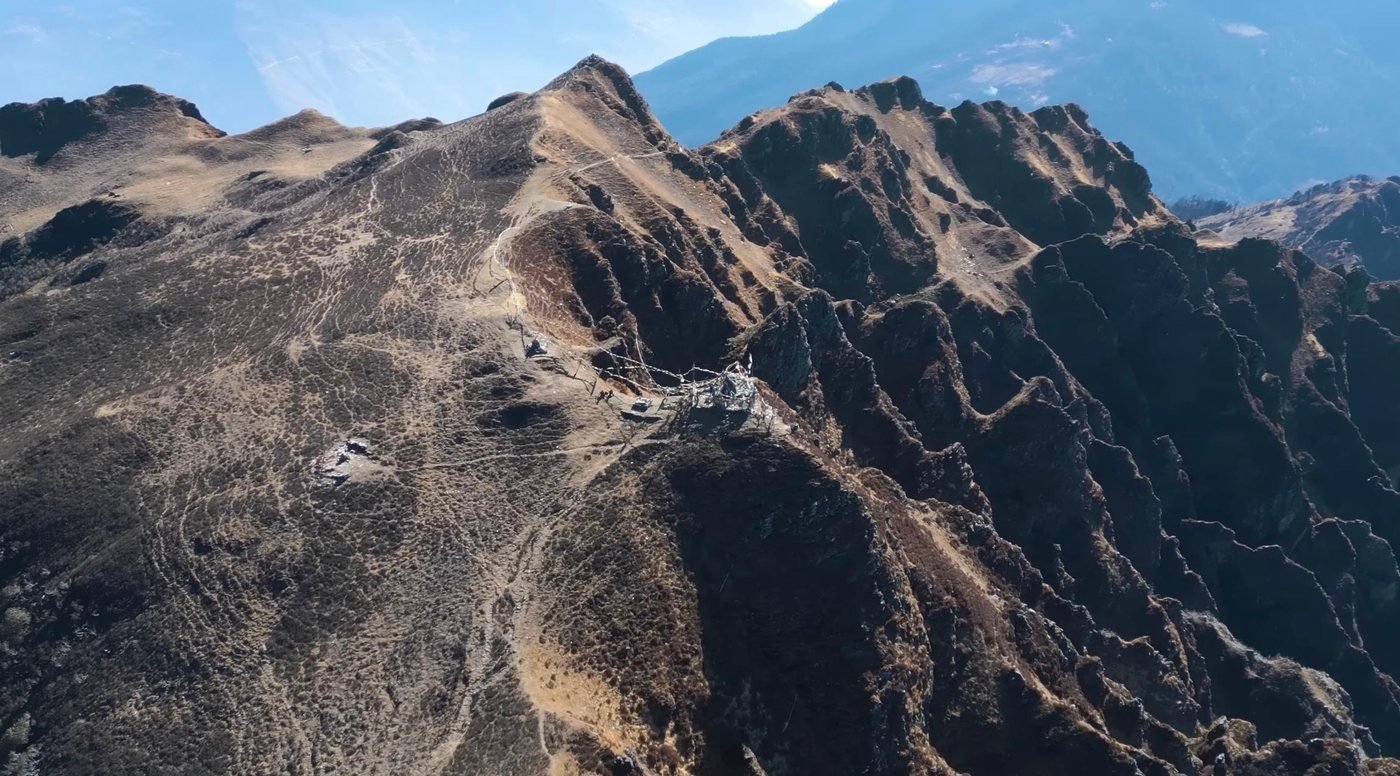
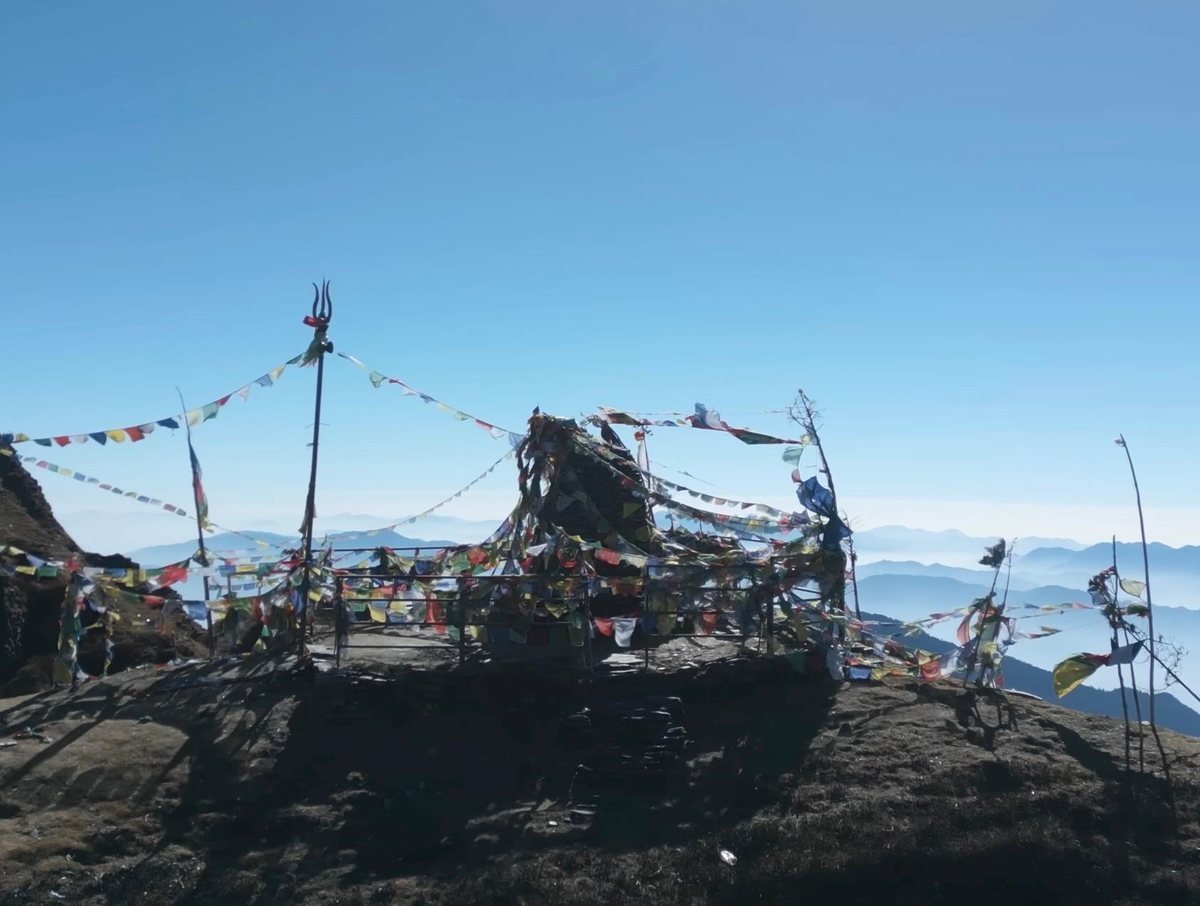
“We don't protect this land because someone tells us to. We protect it because it is part of who we are. If we lose this, we lose ourselves.” Ram Singh Tamang, Mayor of Ruby Valley — recorded in Jasmine's field notes
Across the themes Jasmine measured, cultural-historical attachment rated highest: respondents valued Inwood Hill Park's Native American history and its deeper meaning, not just its lawns and trails. The single strongest item in the survey was telling — “Being in Inwood Hill Park helps me feel calm or less stressed” drew a mean of 4.47 on a five-point scale, with “I feel emotionally connected to Inwood Hill Park” close behind at 4.15. As Jasmine put it, the place is not merely functional; it is restorative, affective — somewhere people go to emotionally exhale.
Indeed, story mattered as much as scenery. Fifty-six of eighty respondents agreed or strongly agreed that knowing the land's Native American history shaped how they saw the park, and forty-nine of seventy-seven said the more they learned about its past, the more it came to matter. Places, her data suggest, become more meaningful precisely when their stories are understood — a finding with real stakes for how cities remember, and forget.
And then there was the woman Jasmine met on a park path who framed none of it through history or ecology. She framed it personally: the park was part of her life, part of who she had been across time. That single conversation captures the thesis better than any statistic, which is exactly the kind of thing a good researcher learns to notice.

“Place is not just where we are. It is part of how we become who we are.” Jasmine Tamang — Soul of the Soil, 2025
People sometimes treat undergraduate research as a dress rehearsal — practice for the real thing later. I don't see it that way. Jasmine's project produced a genuine contribution: it took a feeling that rarely survives the trip into a policy memo — the quiet, emotional attachment people form with land — and made it visible, measurable, and worth protecting. That is real scholarship, done by an undergraduate, in a single summer.
Mentoring work like this is among the most meaningful things I do at St. Joseph's. The goal is never to produce a smaller version of my own research; it is to help a student trust that their lens, their questions, and their story belong in the conversation. Jasmine did the hard part. I just made sure the door was open. To future SURF students wondering whether their question is “academic enough” — Jasmine's answer, and mine, is the same: bring it, and let's find out.
Well... not every mentorship begins with a student's own question. Sometimes it begins with an invitation to join something much larger than a single lab. Alia Rohain was working with me as my research assistant when our lab signed on to a project I could not have run alone — a multi-site, multi-lab, multinational replication of one of social psychology's most famous and most troublesome findings: the hostile priming effect. Alia and I ran the St. Joseph's version, and our data became one of twenty-nine labs' worth of evidence in a single published paper (McCarthy et al., 2021).
What made this experience so full was that nearly every step turned into a teachable moment — not only about how research is done, but about the history of how we came to do it this way. To work on a replication is to walk back through the discipline's own memory: the original study, the decades of confidence built on it, the slow realization that the effect was harder to find than anyone assumed. Alia did not just learn a method. She learned where the method came from, and why the field was nervous about it.
The task was to reproduce the hostile priming effect first reported by Srull and Wyer (1979), using their celebrated “Donald” paradigm. The idea is elegant: expose people to words and sentences related to hostility, then have them read an ambiguous paragraph about a man named Donald — a fellow whose behavior could be read as either assertive or aggressive — and ask them to rate how hostile he seems. If hostility has been “primed,” the reasoning goes, it should color the interpretation, and Donald should look meaner. For years this was treated as a settled demonstration of how easily the mind's recent contents bleed into judgment. The trouble is that, in more recent and more careful attempts, the effect has repeatedly failed to show up reliably — which is exactly why it became worth testing at scale.
Alia worked through the whole apparatus, not a sliver of it. We built all of the stimuli from scratch, then tested them — having them rated to confirm that the “hostile” materials really did read as hostile and the neutral ones as neutral — before assembling the vetted stimuli into the priming task itself. Then we ran two studies: a direct (close) replication that followed the original recipe as faithfully as possible, and a conceptual replication that tested the same underlying idea with somewhat different materials. Both versions, run at our site alongside twenty-eight others, fed into the final paper. To the extent that I believe undergraduates should experience every part of the research process — design, stimulus construction, piloting, data collection, and yes, peer-reviewed publication — this project delivered all of it.
Here is the part I most want students to sit with. One lab's result — ours included — is a single data point in a noisy world, and on its own it can mislead you. The real lesson of this project only becomes visible when you stack all twenty-nine labs together in one figure. This is called a forest plot, and learning to read one is a genuine research skill.
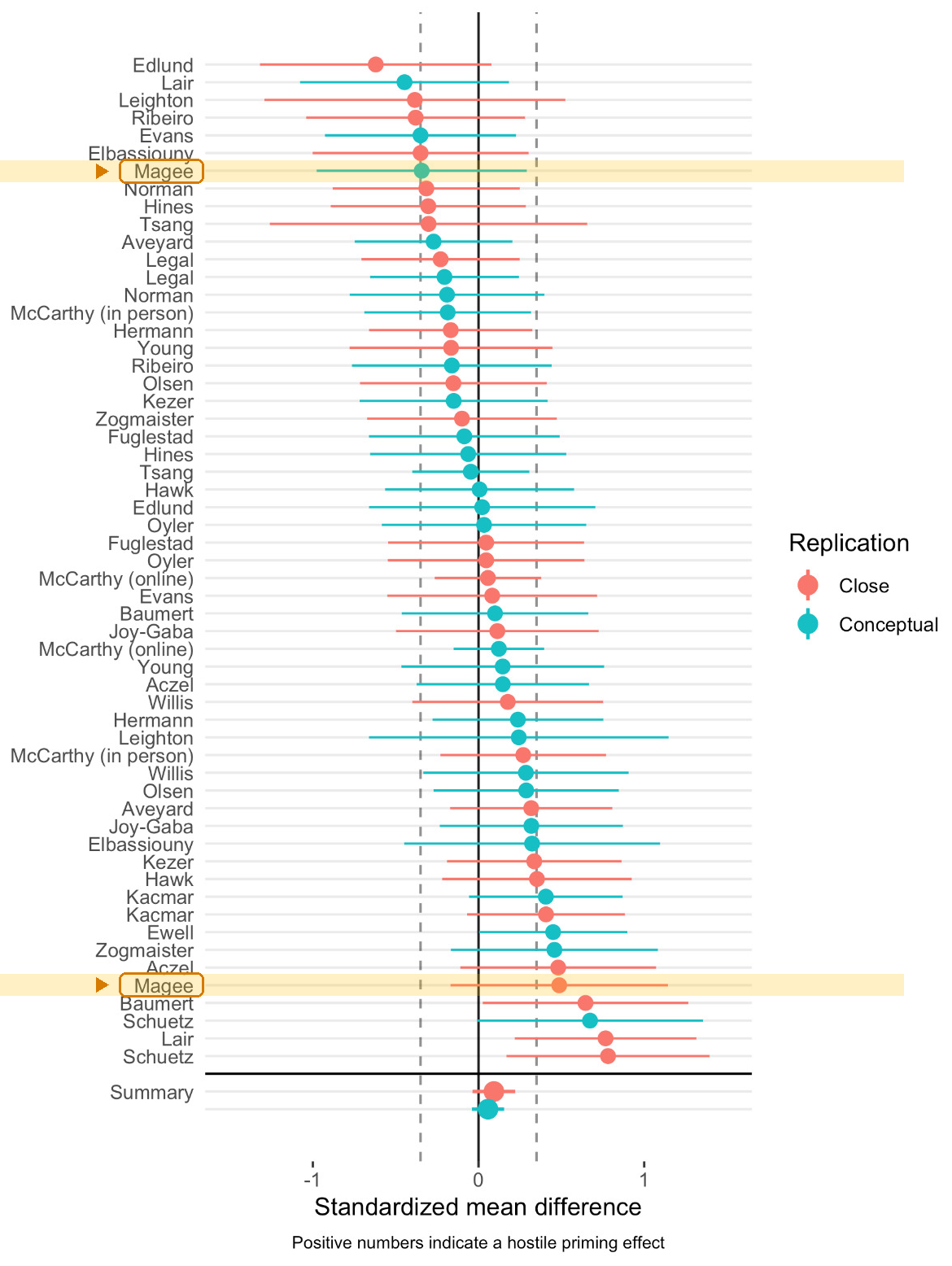
So how do you read it? Each horizontal line is one laboratory's finding. The dot is that lab's effect size — a standardized measure (Cohen's d) of how much more hostile Donald seemed after hostile priming compared with neutral priming. The horizontal line through each dot is its 95% confidence interval: the range of true values that are statistically plausible given that lab's data. The tall line at zero marks “no effect at all.” A dot to the right of zero means priming pushed ratings in the predicted, more-hostile direction; a dot to the left means it went the other way. And here is the key reading rule: if a lab's confidence-interval line crosses zero, that lab did not find a statistically significant effect.
Now look at the spread. The dots scatter on both sides of zero. Most of the confidence intervals comfortably cross the zero line — meaning most individual labs found nothing significant — while a handful land far enough to one side to look like “a result.” Some of those significant-looking labs point right, a few point left, and they do not agree with one another. This is what statistical noise looks like when a true effect is small or absent: a scattering of hits and misses that, lab by lab, could each be written up as its own little story.
For a vivid example, find our own two rows — the ones highlighted in amber. Our close replication (red) landed to the right of zero, hinting at a hostile priming effect; our conceptual replication (teal) landed to the left, hinting at the opposite. Same lab, same students, same semester — opposite-looking results, both well within the range of ordinary noise. If we had run only one of them, we might have walked away with a confident and completely contradictory conclusion. That is the humbling lesson a forest plot teaches at a glance.
Indeed, that is the whole point of publishing every site together. Read in isolation, our St. Joseph's data — or any one lab's — might have suggested the effect is real, or that it clearly isn't. Only the full collection lets you see the range from significance to non-significance all at once, and only the row at the very bottom resolves it. That “Summary” line pools all twenty-nine labs into one meta-analytic estimate, and it sits essentially on top of zero (close replications, d = 0.09; conceptual, d = 0.05; neither significantly different from zero). The famous hostile priming effect, gathered across thousands of participants on multiple continents, very nearly vanishes. That is not a failure of the research — it is the research, and it is a clean illustration of why the field moved toward large, coordinated, multi-lab studies in the first place.
I am proud of this one for a simple reason: it is a genuine example of an undergraduate research assistant taking part in every aspect of the scientific process and emerging with a peer-reviewed publication to her name. Alia helped build and validate stimuli, ran two studies, and contributed data that became part of the published record — not a classroom exercise dressed up as research, but research, full stop. To the extent that mentorship means letting students do the actual work and feel its actual weight, this is what I hope it looks like.
And the through-line, for me, was always the teaching inside the doing. Every stimulus we rated, every replication we ran, every confidence interval we later squinted at on that forest plot was a chance to talk about how knowledge in our field is built, questioned, and sometimes quietly revised. That is the kind of experience I want every student who passes through the lab to have.
The paper. McCarthy, R., Gervais, W., Aczel, B., … Magee, M. W., … Rohain, A., … Zogmaister, C. (2021). A multi-site collaborative study of the hostile priming effect. Collabra: Psychology, 7(1), Article 18738. https://doi.org/10.1525/collabra.18738
The original. Srull, T. K., & Wyer, R. S. (1979). The role of category accessibility in the interpretation of information about persons: Some determinants and implications. Journal of Personality and Social Psychology, 37(10), 1660–1672. https://doi.org/10.1037/0022-3514.37.10.1660