Undergraduate Research · SJNY
Loving yourself a little more than your selfies.
Romão Nóbrega, V., & Magee, M. W. Undergraduate poster, St. Joseph's University New York.
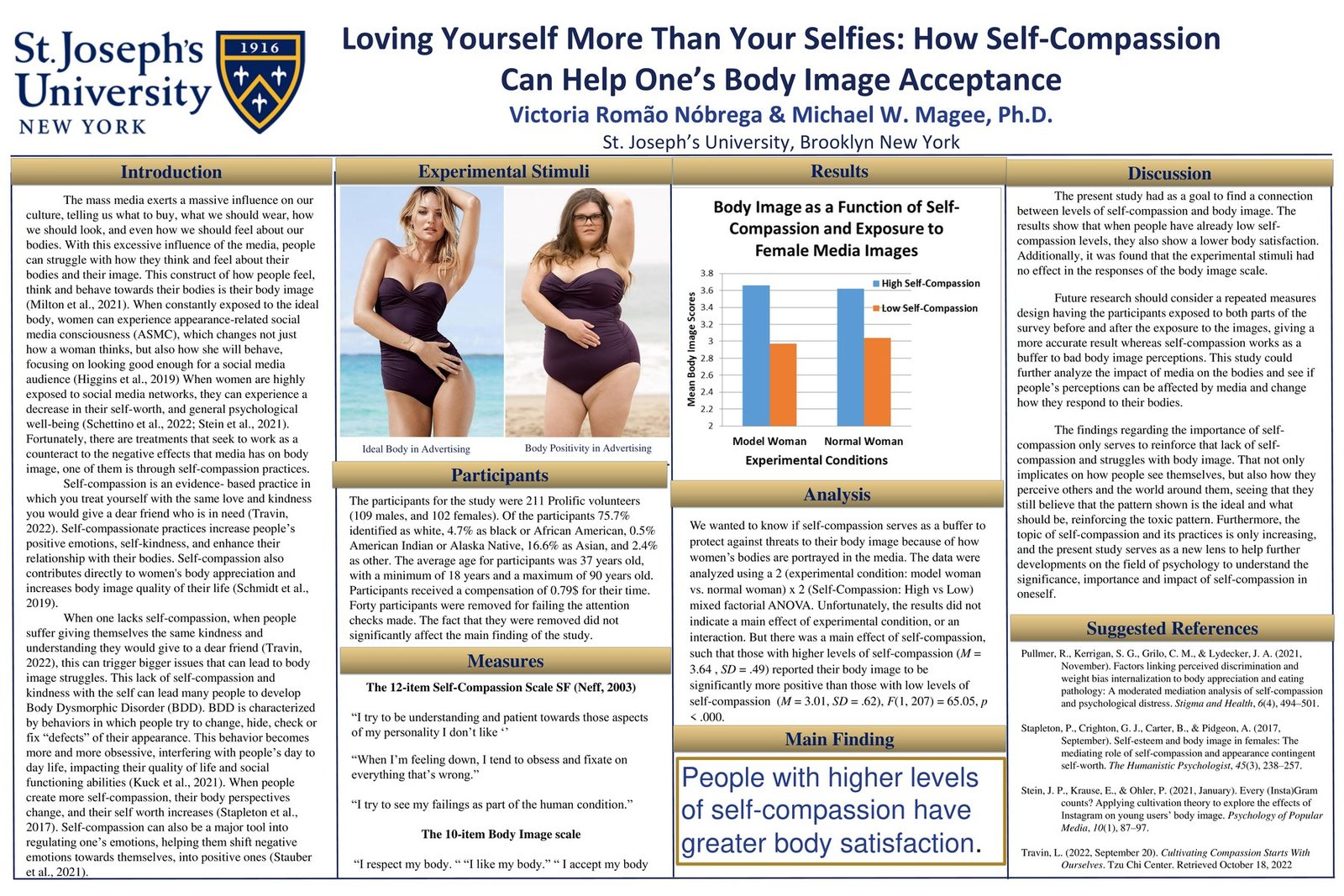
Every feed is a gallery of idealized bodies, and the comparison rarely ends well. Victoria asks whether self-compassion — meeting your own body with the warmth you'd give a friend — can buffer that pressure. Her proposed 2×2 study crosses self-compassion (high vs. low) with the image viewed (a fashion model vs. an everyday woman), predicting that people who treat themselves kindly stay more satisfied with their bodies no matter what the screen shows. Kindness, it turns out, may be the best filter we have.
View poster
Undergraduate Research · SJNY
Even the compliments can hurt.
Phanjavidze, A., & Magee, M. W. Undergraduate poster, St. Joseph's University New York.
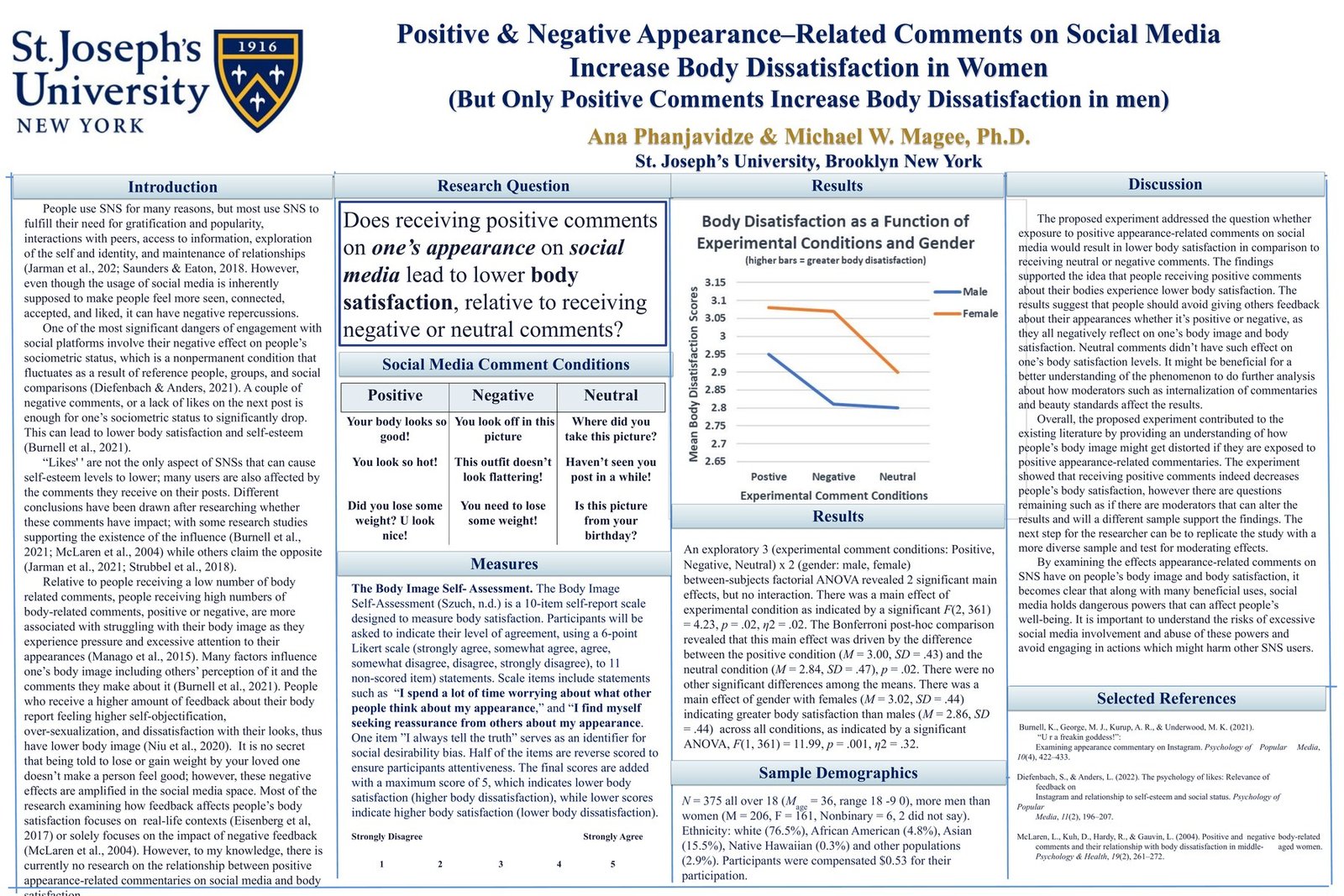
“You look so good in this picture” — surely that helps? Ana's study says otherwise. She randomly assigned 375 adults to read positive, negative, or neutral appearance comments on a mock Instagram post, then measured body image. It was the positive comments that left people more dissatisfied than neutral ones did — praise about appearance still trains attention on being looked at and judged. Women reported greater body dissatisfaction than men across the board. The kindest move, it seems, may be to say nothing about the body at all.
View poster